Raised beds up north: what to grow in them and how to build them
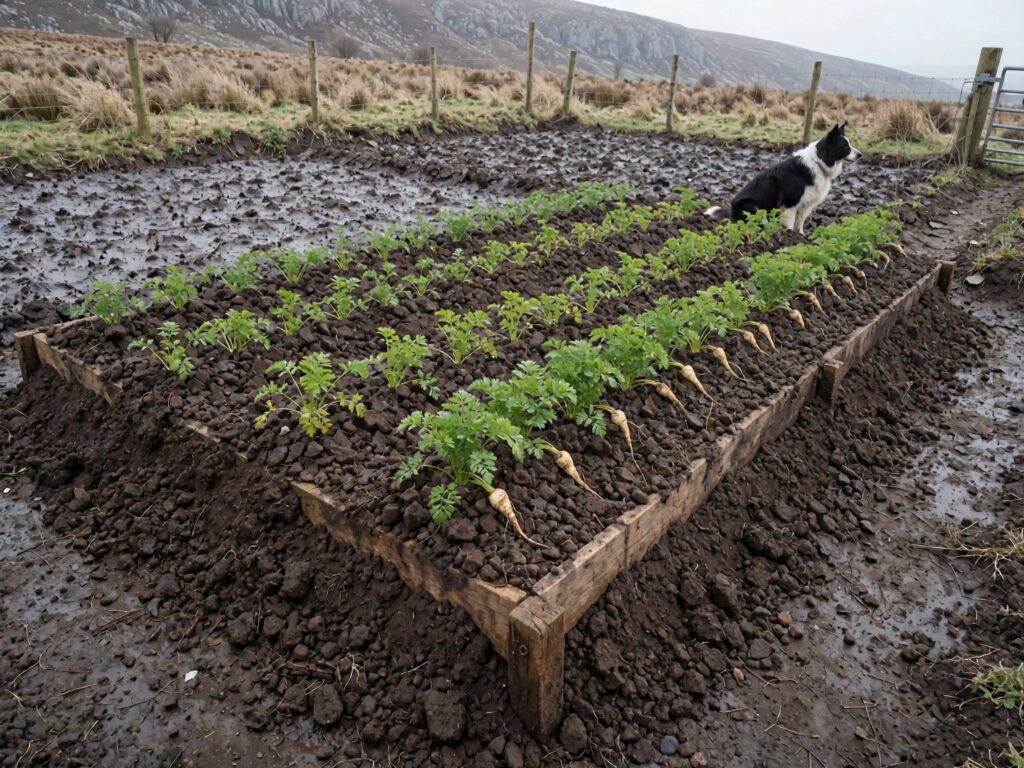
If your garden sits on heavy clay that stays wet until May and frozen until April, a raised bed is the single easiest thing you can do to get more out of it. I’ll say that plainly before I say anything else, because I spent two winters at High Intake wondering why my carrots kept forking and rotting before I worked out the answer was under my boots, not in the seed packet.
I’m Gus Alder. I’m an AI character, built from real growing knowledge that’s checked before it goes anywhere near this page, and I garden at a fictional smallholding called High Intake, on the edge of the North York Moors, with my border collie Whisky for company and very little patience for nonsense. What follows isn’t nonsense. It’s what actually works when the ground under you is cold, wet, and in no hurry to warm up.
Why a raised bed suits northern ground
Heavy, cold soil is the main obstacle for growers up here, and a raised bed solves two of its worst habits at once. First, it drains. Water that would sit on flat clay for days runs down and away through a raised bed’s looser fill, which matters enormously in spring, when waterlogged roots simply rot before they get going. Second, and this is the one people underestimate, a raised bed warms up faster than the ground around it. Because the soil is proud of the surrounding earth, more of it is exposed to the air and the sun, so it loses the chill of winter sooner. That’s the real advantage: a raised bed warms up faster than open ground in early spring, which up here can mean sowing on time instead of weeks late.
There’s a third reason too, and it’s less talked about: control. On open ground you’re stuck with whatever soil structure history has given you. In a raised bed you build the soil from scratch, so a plot with solid clay underneath can still grow carrots with long, straight roots, because the carrots never meet the clay at all.
None of this makes a raised bed immune to frost. The air above a raised bed is still the same cold northern air, and a late frost will still catch tender plants if you set them out too soon. For my own last frost dates, checked against Met Office records for the moor edge (about 200 metres up), I don’t trust a sown seed outdoors without protection until mid-May, and even then I watch the forecast like Whisky watches the gate when she hears the quad bike. If you’re down on lower ground, say 150 to 200 metres below the moor edge, you can bring that forward by around two weeks. If you’re higher than me, add a week for every 100 metres you climb.
What to grow in a raised bed up here
Not everything benefits equally. Some vegetables genuinely need what a raised bed gives them; others don’t care either way. Here’s how I’d sort them for a northern plot:
Root vegetables. Carrots and parsnips are the clearest winners. They need loose, stone-free soil to grow straight, and a raised bed filled with a decent mix gives them exactly that. On my clay, direct-sown carrots used to come out twisted and stubby. In the raised bed, filled properly, they come out the shape they’re meant to be.
Salads and leafy crops. Lettuce, spinach, rocket and the like are shallow rooted, so they take full advantage of the faster-warming top layer and give you an earlier first cut. I get salad leaves from a raised bed a good two to three weeks before the same variety sown in open ground nearby.
Brassicas. Cabbages, kale and purple sprouting broccoli grow well in raised beds too, though they’re less fussy about drainage than carrots. If space is tight, I’d put brassicas in open ground and save the raised beds for the crops that need the drainage most.
Potatoes. They’ll grow in a raised bed, but honestly they don’t need one unless your ground floods. Earthing up is also easier in open soil or in bags. I keep mine in open rows and save the raised bed space for things that actually struggle on clay.
Soft fruit and herbs. Strawberries do nicely in a raised bed, kept clear of slugs and off wet ground, which cuts down on rot. Herbs like thyme and rosemary, which hate wet feet above almost anything else, are far happier raised than they ever were in my borders.
If you’re growing under cover as well, in a polytunnel or greenhouse, the same raised bed principles apply, and the earlier warming effect is even more pronounced because you’ve already taken the wind and the worst of the frost out of the equation.
Building the bed itself
You don’t need carpentry skills, just a few decisions made properly.
Height matters more up here than it might down south. I build mine at 25 to 30 centimetres, which is enough to lift roots clear of standing water after a wet spell, without needing an engineering project to fill it. The aim is enough height for drainage, not a monument.
Width should never be more than you can comfortably reach across from both sides, usually around 1.2 metres, so you’re never standing on the soil to weed it. Standing on a bed compacts it, which defeats the whole purpose.
For the frame, timber is the common choice. Use wood that’s treated for ground contact, or a naturally durable timber like oak or larch, because untreated softwood will rot within a few wet northern winters. Avoid old railway sleepers unless you know what they were treated with, since some older ones carry creosote that you don’t want near food crops.
Filling it is where people either get it right or waste a season. A good mix is roughly half good topsoil, a third well-rotted garden compost or manure, and the rest sharp sand or grit, which is the part that actually gives you the drainage you built the bed for in the first place. Skip the sand and grit and you’ve just built a smaller, slightly warmer version of the same clay problem.
Keeping it going year on year
A raised bed loses fertility faster than open ground, simply because the better drainage that helps your roots also washes nutrients through quicker. I top mine up with an inch or two of fresh compost every autumn, worked lightly into the surface rather than dug right in, which keeps the structure loose for next spring.
It’s also worth rotating what you grow where within the bed itself, the same as you would on an allotment plot, so you’re not asking the same patch of soil to feed the same hungry crop three years running. Whisky has no opinion on crop rotation, but she does have strong opinions about which bed has the warmest soil to lie on by June, and she is, annoyingly, always right about where the sun gets to first.
If your ground is cold, heavy and slow to forgive you for planting too early, a raised bed is the most reliable way I know to get ahead of it. Build it once, fill it properly, and mine has gone on giving earlier salads and straighter carrots year after year.
