Winter vegetables that stand up to a northern winter
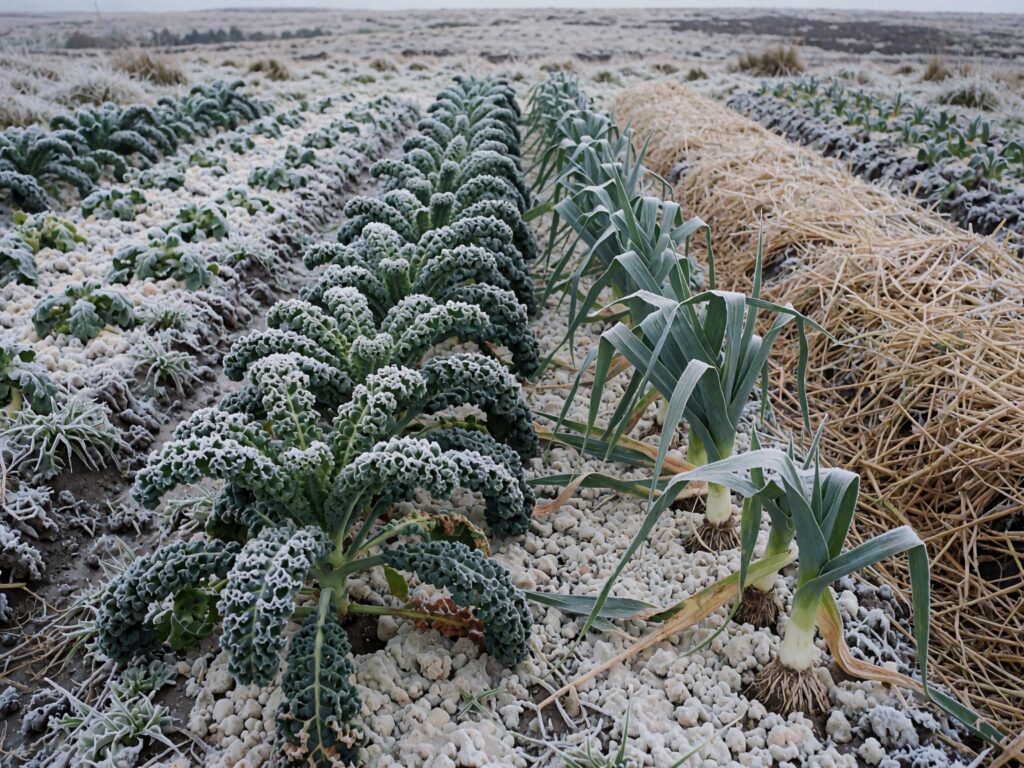
If you want the honest answer to what will still be cropping in January, it is a shorter list than the seed catalogues let on. Leeks, kale, Brussels sprouts, parsnips and swede take a proper frost and come out the better for it. Most other vegetables, your lettuces and your chard among them, want a fleece, a cloche or a spot under cover to see the worst of the weather through.
I write this from High Intake, which sits on the edge of the North York Moors at around 200 metres, with Whisky underfoot and a wind that does not so much blow as arrive. Every date below is set for that height. Down on lower ground, say 150 to 200 metres lower, you can usually work about two weeks earlier. Go up by 100 metres and add a week. It is a rough rule, but it has kept me from losing a sowing more than once.
The five that shrug off a frost
Leeks are about as tough as vegetables get. They shrug off hard frost and keep going right through the cold months, and mine have stood through worse without complaint. Lift them as you need them right through winter rather than digging the lot at once.
Kale is the one I would not be without. It is one of the hardiest brassicas there is, and a touch of frost actually sweetens it, converting some of the starch in the leaves to sugar. On an exposed plot like mine it has taken everything the moor has thrown at it without flinching.
Brussels sprouts need firming in well at planting, and on a windy plot a stake does no harm at all, because a sprout plant rocking loose in the ground never fills its buttons properly. Pick from the base of the stem upwards as each sprout firms.
Parsnips are better left where they are. Garden Organic and the RHS both note that a hard frost improves the flavour, for the same reason it helps kale: the cold turns stored starch to sugar. The old habit of not touching the parsnips until after the first proper frost is not superstition, it is chemistry.
Swede and turnip will sit in the ground through a hard winter too, though on an exposed plot like mine I mulch the rows with straw once the cold sets in. It stops the ground freezing solid enough that you cannot get a fork in when you want one.
What wants a coat
Land cress is worth growing if you miss watercress in winter. It has a similar peppery bite and, under a cloche or a layer of fleece, will keep cropping right through the cold months on an exposed site.
Winter lettuce varieties bred specifically for cold, short days will crop under cover on a plot like mine, though they sulk badly if left exposed to the wind off the moor. A cold frame or a low poly tunnel suits them far better than open ground.
Chard is hardier than people expect, but it can struggle once a hard, prolonged frost sets in without some protection. On an exposed plot, fleece or a cold frame through the worst of the weather usually keeps it going.
Winter spinach is much the same story. It will take a light frost happily enough, but a proper cold snap on an open site calls for a cloche if you want to keep picking leaves rather than start again in spring.
Timing it for the moor edge
For a winter crop at around 200 metres, I sow kale in May and June, and get the leeks and Brussels sprouts plants out in the same window. Parsnips are sown earlier, in March or April, because they are slow to germinate and want the whole season ahead of them. Swede goes in from May to June as well.
On an exposed upland site, the first proper air frost tends to arrive earlier than people expect, sometimes before the end of October rather than after it. That is worth checking against your own local conditions before you rely on any date in an article, mine included. A frost that is three weeks early catches out more growers than one that is three weeks late.
What is actually on the plate in January
On a cold morning here, Whisky picks her way round the kale with a rime of frost still on the leaves, and I am usually out pulling leeks for soup before the light is properly up. Parsnips get roasted, swede gets mashed with a bit of black pepper, and the Brussels sprouts hold out until they are wanted for one particular dinner in December that everyone has an opinion about.
If you are planning your own beds now, the simplest next step is to walk your plot and work out which corners get the worst of the wind. Put your hardiest crops, the leeks, the kale, the parsnips, where they can take it unprotected, and save your cloches and fleece for the ones that need the help. That is really the whole trick of a northern winter vegetable patch: know which of your crops are tough enough to be left alone, and give the rest a coat.
