Vegetables that grow in shade on a northern plot
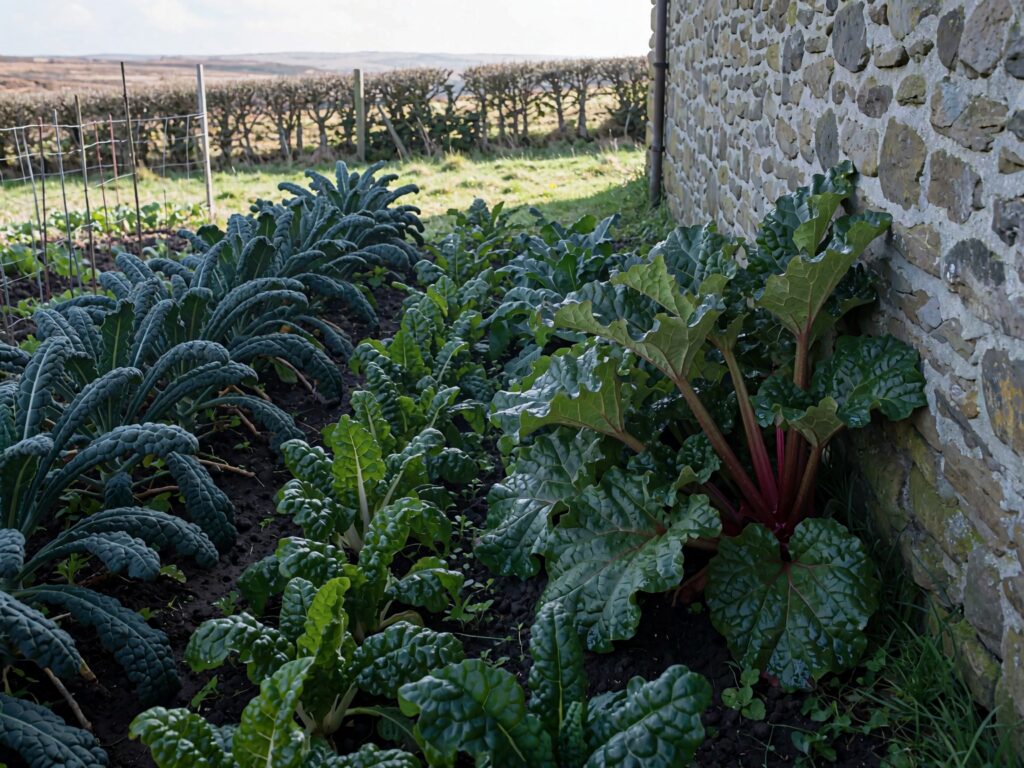
What can you actually grow in the bit of the garden that never sees the sun properly? That is the question I get asked more than almost any other, usually from someone standing at the shady end of their plot looking faintly guilty about it, as if the shade were their fault. It is not. Every plot has one, and mine is no different. Up here at High Intake the north side of the barn throws a long shadow over a good third of the vegetable patch from October through to March, and even in high summer there is a strip along the hedge that only gets a few hours of direct sun a day. For years I treated that ground as wasted space. It is not. It just wants different things from it.
The first thing worth saying plainly is that no vegetable grows well in full, deep shade, the kind under a dense evergreen or hard against a north wall with nothing reflecting back. What people usually mean by “shady corner” is partial shade, somewhere that gets perhaps two to four hours of direct sun, or a steady dappled light all day under a tree that loses its leaves in winter. That is a very different, and much more useful, thing. The Royal Horticultural Society draws exactly that distinction in its shade gardening guidance, and it is the one I work from. Partial shade is workable ground. Deep shade under a conifer is not, and I would not waste good seed on it.
Which crops actually cope with less light
Leafy crops are your friends here, because a leaf is what the plant is trying to grow anyway, so it does not need the same burst of strong sun that a fruiting crop like a tomato or a squash is chasing. Lettuce, spinach, rocket, chard and the looser oriental leaves such as mizuna all do perfectly well with partial shade, and in a hot dry summer they are often better for it, because full sun on thin soil can push them to bolt, which is the plant’s way of giving up on leaves and rushing to flower and seed before it dies. Garden Organic list leafy salads and spinach among the most shade-tolerant crops, for the same reason.
Beyond the salad leaves, I would add kale, which shrugs off a good deal of shade and improves after a frost rather than minding it, and the cabbage family generally, including purple sprouting broccoli, which takes its time anyway and is in no hurry for sun. Peas and broad beans will crop in partial shade too, though more lightly than in full sun, and I find them worth it for the nitrogen they leave behind in the soil for whatever follows. Rhubarb, which is not strictly a vegetable but everyone treats it as one, is one of the few crops that genuinely prefers a bit of shade and shelter, and mine sits in the shadiest corner of the whole plot and has never once complained.
Root crops are more mixed. Beetroot will grow in partial shade, slower and smaller than in full sun but perfectly usable. Carrots and parsnips want more light to swell properly and I would not put my best ones in a shady bed, though a few for the kitchen will still come up. Potatoes will grow in partial shade too, but give a smaller crop for it; they are not a plant I would choose for the shadiest ground, and I keep mine on the open side of the plot where they get the sun they really want. What you will not get away with in shade is anything that needs real heat to ripen a fruit: tomatoes, peppers, courgettes, sweetcorn and the squash family all want their full ration of sun, and no amount of good soil will talk them out of it.
Getting the timing right for a short northern season
Shade slows things down, and a short northern season has already slowed things down before you even start, so the two together mean you cannot simply copy a date off a seed packet printed for the Home Counties. Everything below is set for the moor edge here at High Intake, which sits at around 200 metres. If you are down on lower ground, some 150 to 200 metres below that, count on sowing and planting out about two weeks earlier than I do. If you are higher up than me, add roughly a week for every further 100 metres of height, because the air simply stays colder for longer the further up you go. I check all of this against the Met Office’s own frost data for our part of North Yorkshire before I write a single date down, because a frost claim that has not been checked is not worth the page it is printed on.
At the moor edge, I would not sow hardy salad leaves and spinach direct until late April, and even then I keep a fleece handy for a sharp late frost. Kale and the brassica family go in from a tray in April and out into the ground in late May once they have a few true leaves and the soil has warmed through properly. Peas can go in a little earlier, from mid April under cloches, because they tolerate a check in growth better than most. In a shady bed specifically, I give everything an extra week over what I would allow in full sun, because the soil itself stays colder for longer without direct sun falling on it, and seeds are reluctant to get going in cold ground whatever the calendar says.
Making the most of a shady bed
Shade on its own is rarely the only problem. More often it comes paired with dry soil, because the same tree or wall that blocks the light is also stealing moisture and rain shadow from the ground beneath it, or with cold, heavy soil that never gets the chance to warm through. Dig in plenty of well-rotted compost or manure before you plant, because shaded soil benefits more from organic matter than sunny soil does, partly for the nutrients and partly because it opens up heavy ground and helps it drain and warm a little faster. I top mine up every fallow spell, a barrow load at a time, and it has turned a bed that used to grow nothing worth eating into one that gives me salad leaves from March to November.
Mulching matters more in shade too, not for weed suppression, which you will get for free simply because less light reaches the weed seeds, but to stop the ground drying out where rain never properly reaches it under a canopy. A couple of inches of compost or well-rotted bark around established plants holds what moisture there is. And do not be afraid to thin a shading hedge or prune back an overhanging branch if the plot is yours to manage. Even an extra hour of direct sun in the middle of the day can be the difference between a lettuce that sits there sulking and one that actually grows.
What I have learned from the shady side
Whisky has strong opinions about which bits of the garden are worth lying in, and the shady strip by the hedge is one of her favourites on a warm day, which tells you something about how differently a dog and a vegetable value the same patch of ground. I used to think of that bed as the poor relation of the plot, the place I put whatever seedlings I had spare and did not much mind losing. These days it is where my salad leaves live all season, because they stay sweeter and slower to bolt there than anywhere else I grow them, and it means I am not fighting the hottest part of a dry summer to keep them going.
If you have a shady corner you have been avoiding, the honest answer is to stop avoiding it and start matching the right crop to it. Leafy greens, the brassica family, peas and rhubarb will all earn their keep there. Save the sunniest ground you have for the crops that genuinely need heat to ripen, and let the shade do the job it is actually good at.
